Walk into a great resort lobby and you'll notice the music before you consciously register it. It's the right tempo, the right level — present but not intrusive. You move toward the pool and the music shifts. By the bar, it's a little livelier. In the restaurant, it's quieter, more intimate. At the spa, it disappears into something almost ambient.
None of that just happens. It's a carefully engineered multi-zone audio system, and when it's done right, guests never think about it for a second. That's the goal.
I've spent years designing hospitality audio systems across some of Orlando's most recognized resort properties. Here's how we actually approach this kind of work — from the first site walk to the moment a property manager adjusts a zone from their phone.
Why Resort Audio Is a Different Problem
A standard commercial audio job might involve a handful of zones — a lobby, a conference room, a breakroom. You spec a small DSP, run some cable, program a few presets, and you're done.
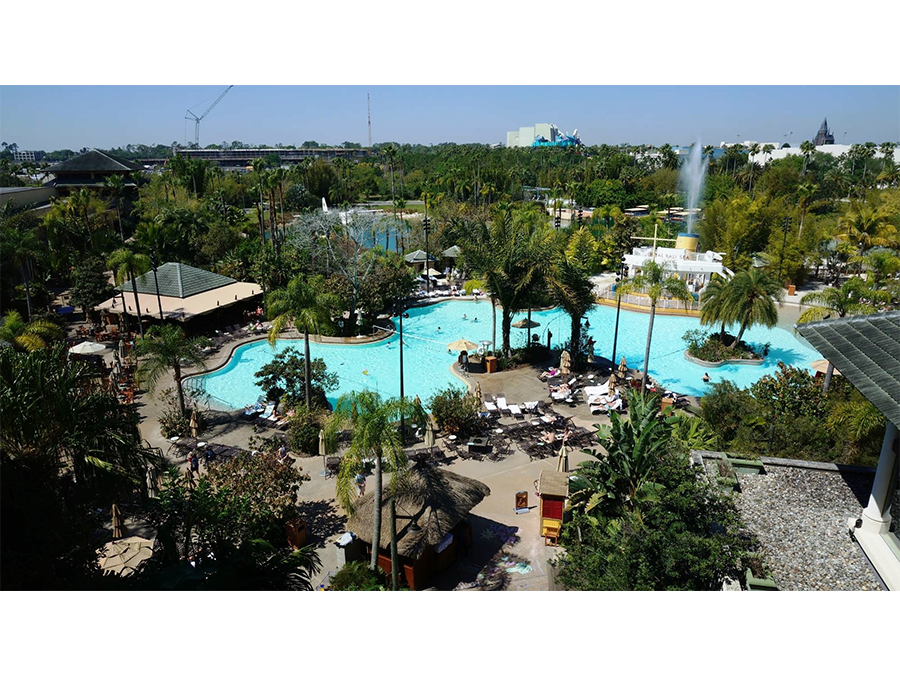
Resort audio is a fundamentally different beast. We're talking about properties with restaurants, pool decks, lobby bars, ballrooms, corridors, fitness centers, spas, back-of-house areas, and outdoor spaces — each with different acoustic characteristics, different ambient noise environments, and different management expectations. The pool deck fights against HVAC noise and outdoor reverb. The spa needs near-silence punctuated by gentle sound. The ballroom needs to go from background cocktail music to full-range live sound reinforcement.
All of this needs to operate independently, be manageable by staff without AV training, and stay running 24/7 without fail.
Phase One: The Site Survey
Before we draw a single line on a system diagram, we walk the property. Thoroughly. We're listening as much as looking — standing in spaces at different times of day, clocking background noise levels, feeling where the acoustic problem spots are. A pool deck surrounded by concrete and glass has completely different audio needs than one with landscape buffering and soft surfaces.
We're also talking to the people who actually run the place. The banquet captain who's been fighting with the same broken input for three years. The restaurant manager who can't figure out how to lower the volume without calling the IT department. The front desk staff who've memorized workarounds because the control system was never explained to them properly.
All of that informs the design more than any spec sheet.
Phase Two: Zone Mapping
Zone mapping is where the design really begins. We sit down with floor plans and start drawing the logical boundaries — not just physical rooms, but operational realities. Should the lobby bar and the main lobby share a zone, or do they need independent control? What happens when a banquet event needs to override the background system in adjacent corridors? Which zones need paging capability, and which are audio-only?
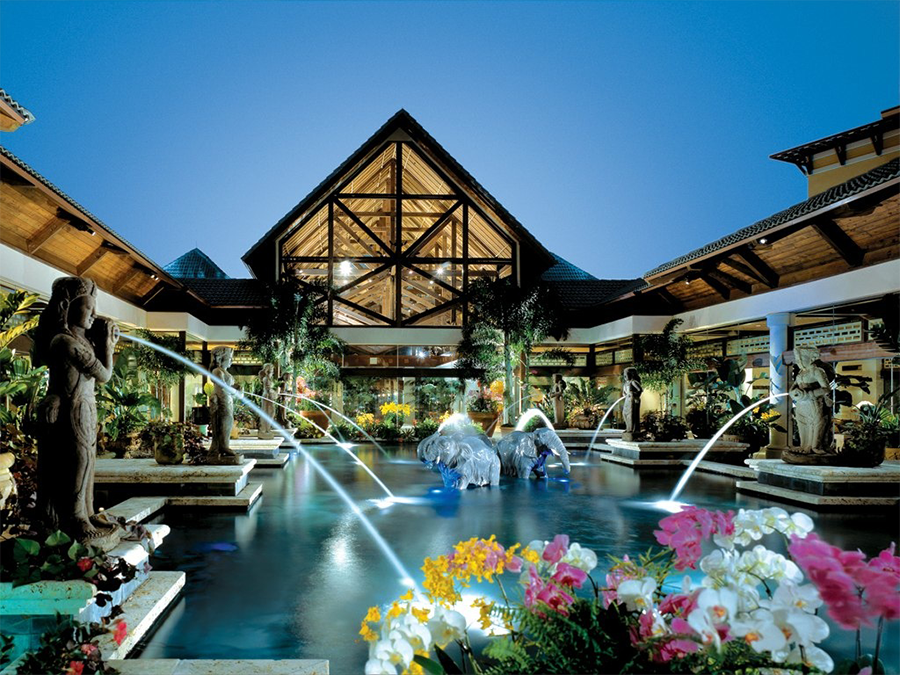
At Royal Pacific Resort, we mapped 16 distinct audio zones running across two amplifier racks. Each zone was designed to operate completely independently while sharing infrastructure. The resort needed the flexibility to run a conference event in one wing, a pool party in another, and a quiet evening service in the restaurant — all at the same time, all without any zone bleeding into another.
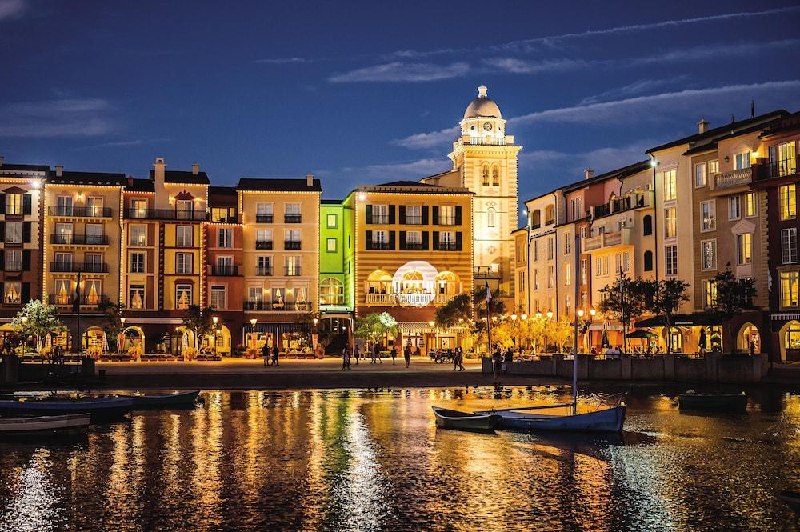
Sixteen zones sounds like a lot until you walk a large resort and realize how many genuinely different acoustic environments exist under one roof. At Loews Portofino Bay Hotel, that number climbed to 33 zones. Thirty-three independent audio environments, all tied together through a single coherent system with centralized management and per-zone control for staff.
Zone mapping forces every decision to be intentional. You can't just run cable and figure it out later — not at this scale.
Phase Three: Amplifier and DSP Selection
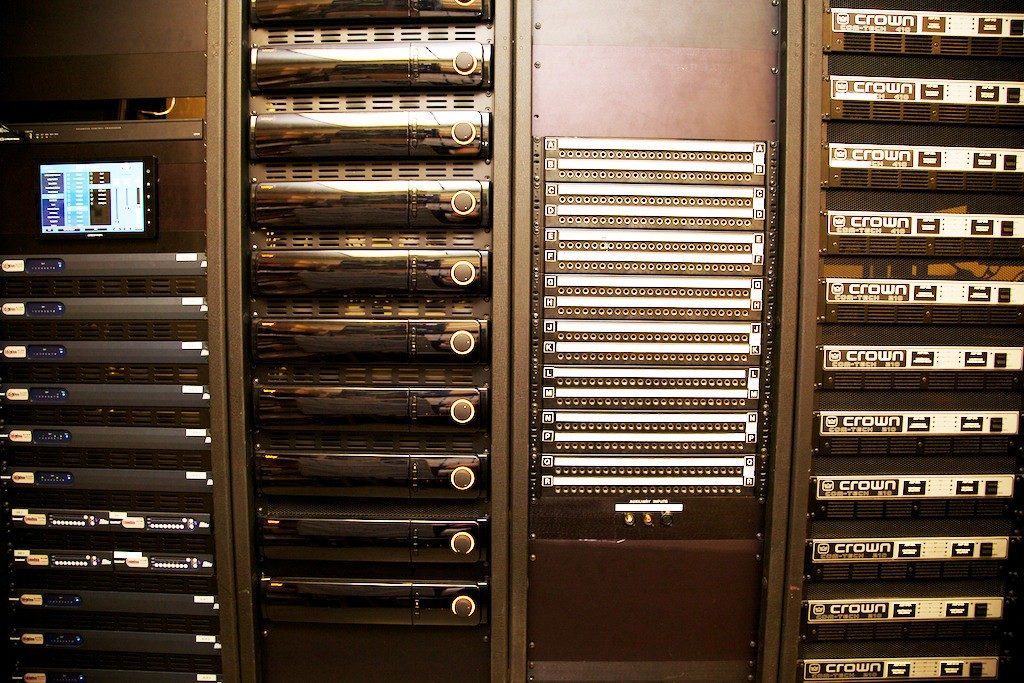
Once zone maps are locked, we spec the backbone. For multi-zone resort systems, amplifier selection matters enormously. You need enough channel count to serve every zone, enough headroom to handle peak loads without distortion, and enough reliability that a single amp failure doesn't take down half the property.
We build systems with logical groupings — zones that share physical proximity or operational behavior sit on the same racks for clean wiring and easy troubleshooting. Critical spaces like ballrooms and main lobbies get redundancy built in. Less critical zones like back-of-house corridors can share channels where appropriate.
The DSP (digital signal processor) is the brain of the whole system. It's where zone routing lives, where EQ and compression are applied, where paging priorities are set, and where volume limits are enforced. A well-programmed DSP means staff can push buttons confidently without accidentally destroying speakers or violating noise ordinances. A poorly programmed one means constant calls to the integrator.
We invest heavily in DSP programming because that's where the difference between a functional system and a great one actually lives.
Phase Four: Speaker Selection and Placement
The right speaker in the wrong location is still wrong. Speaker selection and placement is an acoustic discipline, not just a preference. Indoor ceiling speakers need to be selected for the room's ceiling height and reflective surfaces. Outdoor speakers need weatherproofing, UV resistance, and wide dispersion patterns that account for open-air attenuation. Pool deck subwoofers need to handle Florida humidity year-round without degrading.
Coverage uniformity is the goal — every point in the zone should hear consistent volume and tonal balance. The classic mistake is under-specifying speaker count and overdriving a small number of speakers to compensate. Loud, harsh sound in some spots and dead zones in others. We'd rather use more speakers at lower drive levels and achieve even coverage that feels natural at every seat.
"The best resort audio system is one guests enjoy without ever thinking about it. Even coverage, appropriate levels, the right music for each space — that's the invisible art of hospitality audio design."
Phase Five: Control and Staff Interfaces
This is where a lot of systems fall apart. The hardware is solid, the programming is clean, and then the property manager opens the control interface and has no idea what any of it means. We've inherited more than a few systems where the "solution" was a laminated cheat sheet taped to the wall next to an incomprehensible touch panel.
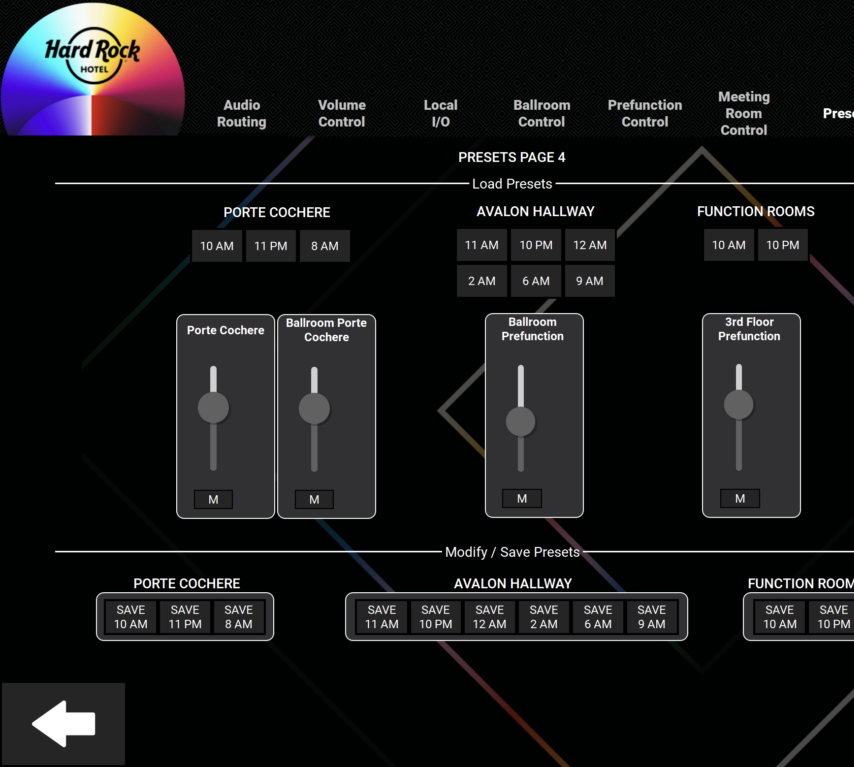
We design for the people who will actually use the system every day. That means custom control interfaces that show only what's relevant — zone volume, source selection, preset recall. It means labeling zones by how staff think about them, not how the DSP addresses them internally. And it means training that's thorough enough that a new hire can get up to speed without calling us.
For larger properties, we build in remote access so our team can monitor, troubleshoot, and adjust without rolling a truck. Most issues at Royal Pacific and Portofino Bay get resolved remotely before anyone on property even notices something was off. That's the support model that actually works for 24/7 hospitality operations.
The Payoff
When a multi-zone resort audio system is designed well, the payoff is immediate and lasting. Guests get an environment that feels right at every turn. Staff get tools they can actually use. Management gets consistent brand delivery without micromanaging every speaker. And the property doesn't have to call the AV company every time they want to change a playlist.
It's not glamorous work from the outside. But it's foundational. Sound shapes mood in ways people don't consciously track but absolutely feel. Get it right and the whole resort feels better. Get it wrong and there's a low-grade irritation that nobody can quite name but everyone experiences.
If your property is running on aging infrastructure or you're planning a renovation or new build, let's talk about what a properly zoned audio system could look like for you. We know this problem well.