Walk into most corporate offices and you feel it immediately. The fluorescent hum. The neutral carpet. The conference room that looks exactly like every other conference room you've ever been in. It's functional, technically. But it doesn't say anything. It doesn't make you feel anything. It's just space.
Then you walk into a space that was designed with intention — where the architecture tells you something about the company, where technology serves the story instead of fighting it, where you leave having felt something — and you understand the difference immediately. It's not subtle. It hits you the moment you walk through the door.
That's what experiential design does. And it's not just for theme parks and hotel lobbies anymore.
What Makes a Space an Experience
Experiential design is the practice of designing spaces that create specific emotional responses. Not just "this looks nice" but "I feel like I'm part of something bigger." The tools are architecture, light, sound, video, motion, and narrative — all working together toward a single emotional goal.
In hospitality, this thinking has been mainstream for decades. Disney built an entire empire on it. The best hotel brands understand that a guest's experience starts the moment they step into the lobby, not when they reach their room. Every element — the scent, the lighting, the sound level, the art on the walls — is calibrated to make you feel a certain way.
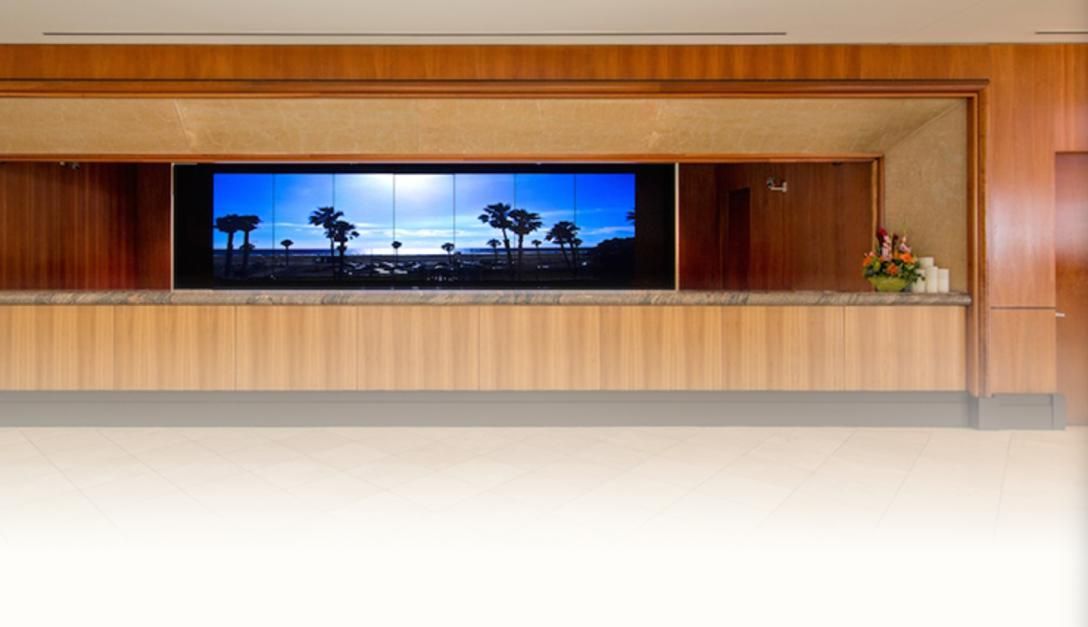
Corporate spaces are catching up. The companies doing it well aren't just putting a nice video wall in the lobby. They're building spaces where the technology and the design are inseparable from the mission.
The Burns & McDonnell Immersive Room
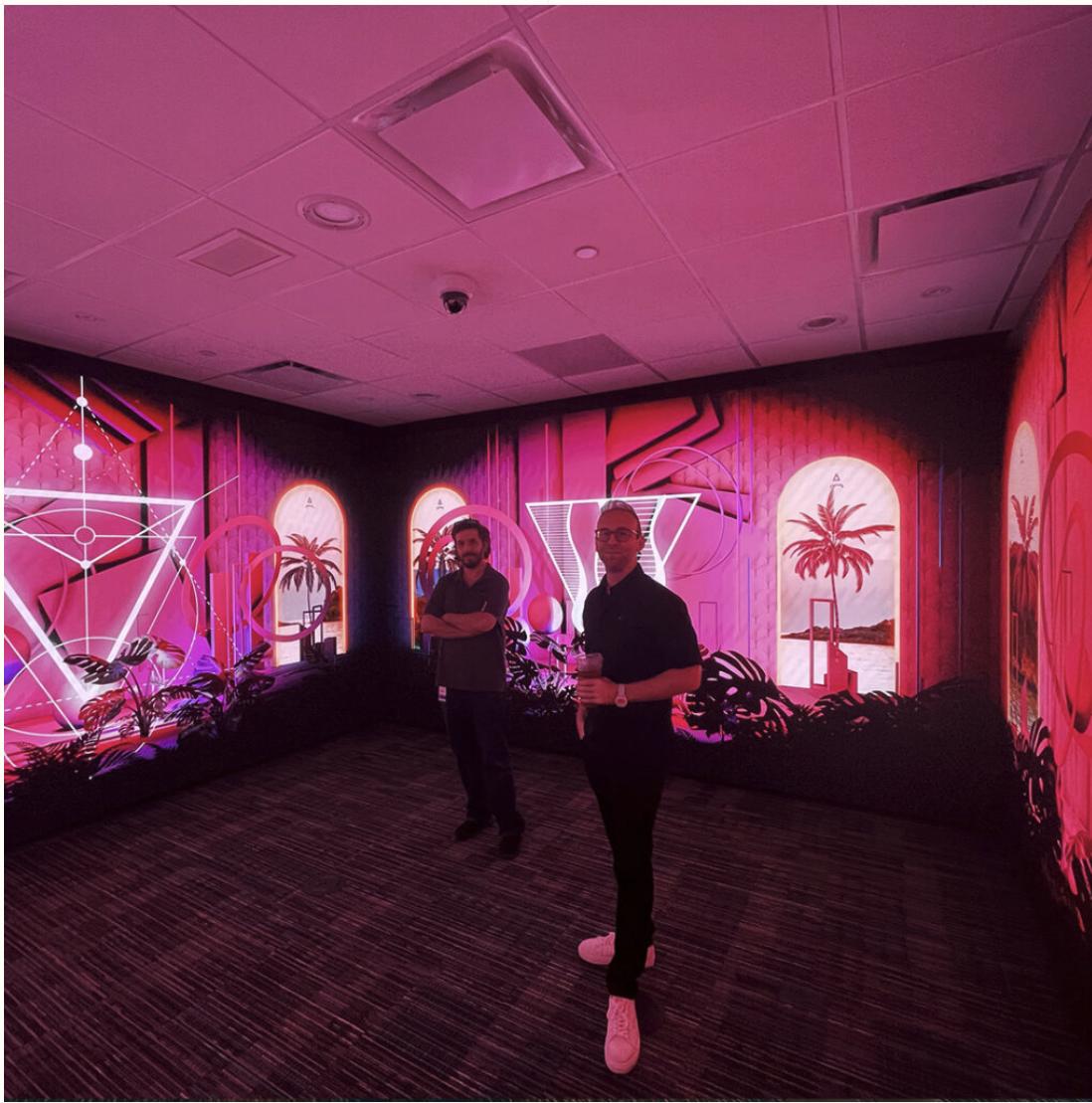
One of the most striking examples of this we've built at 42 Audio Visual is the 360° LED immersive room we created for Burns & McDonnell, one of the country's largest engineering and construction firms.
The idea was simple but ambitious: take the conference room concept and turn it inside out. Instead of a table, a projector, and a screen — build a room where every wall is a display. Where you can step inside a project before it's been built. Where an engineer presenting a pipeline route can put their client literally inside the landscape.
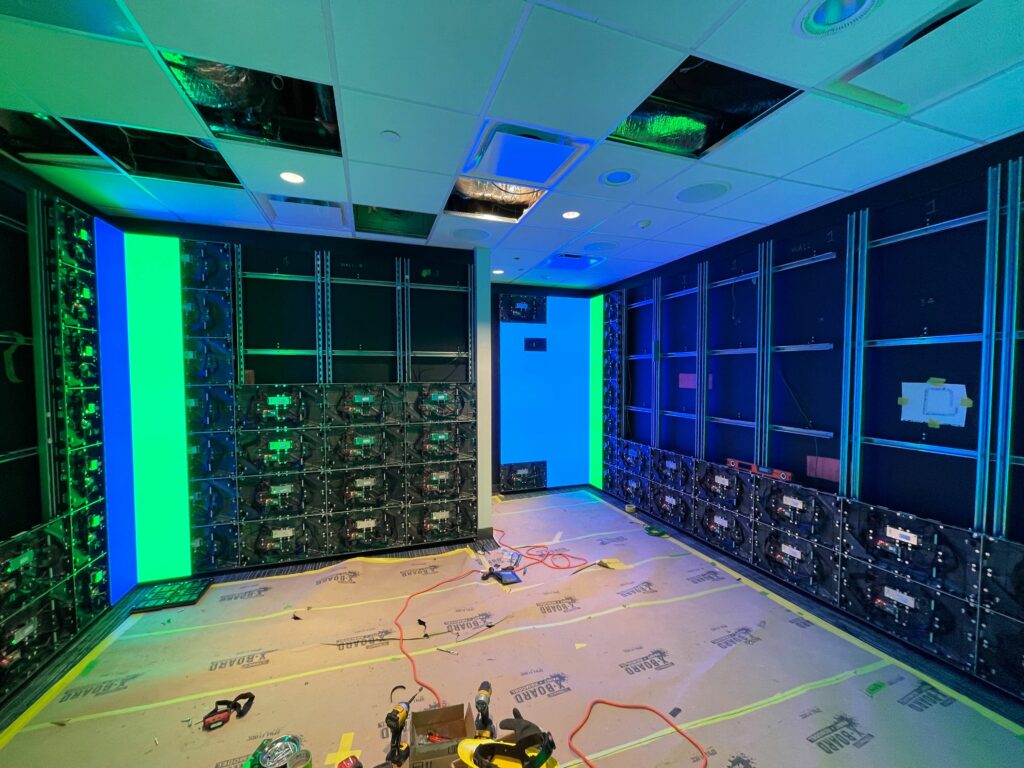
The technical execution required precision. Floor-to-ceiling LED panels, seamlessly tiled, with content systems capable of rendering a single coherent image across the entire room. Audio reinforcement tuned for speech clarity so that presentations don't get lost in the space. Control systems simple enough that engineers — not AV technicians — can run the room without thinking about it.
But the technical part was almost secondary. The real work was understanding what Burns & McDonnell actually needed: a room that made their clients feel the scale of what was being proposed. That made abstract engineering feel tangible. That gave their presenters a tool no other firm in their space had.
"The room doesn't just show the work. It puts you inside it. That's the difference between a presentation and an experience."
Why Companies Are Investing in This
There's a practical case and an emotional case. The practical case: differentiation. In a world where every boardroom has a 75" display and a video conferencing system, the companies that have built something genuinely different have a conversation piece, a competitive tool, and a recruiting advantage. When a prospect walks into your space and feels something, that feeling transfers to how they perceive your company.
The emotional case is harder to quantify but just as real. Spaces shape culture. When your employees work in an environment that reflects what your company believes, that communicates something to them every single day. It says: we think about how this feels. We care about the details. We're not just going through the motions.
Companies with strong physical cultures retain talent differently. The space becomes part of the story people tell about working there.
The Ingredients of Experiential Corporate Design
Every space is different, but the elements we keep coming back to in corporate experiential design:
- Narrative clarity — what is this space trying to say? What should someone feel when they walk in?
- Light as a design material — not just illumination, but atmosphere. Warm zones vs. focused work zones vs. presentation environments.
- Technology that disappears — the best AV integration is invisible. You notice the experience, not the equipment.
- Sound that serves the space — acoustic design matters as much as visual design. A beautiful room that sounds terrible fails.
- Control that empowers staff — an experiential space only works if the people using it every day can actually run it without friction.
It Doesn't Have to Be a 360° LED Room
The Burns project is a dramatic example, but experiential corporate design scales. It can be a lobby video wall that tells your company's story with real content instead of a rotating screensaver. It can be a conference room where the AV actually works every time and the lighting shifts automatically for presentations. It can be a break room where the sound design makes people actually want to stay for lunch.
The question isn't whether you can afford it. It's whether you can afford the alternative — spaces that don't communicate anything, don't inspire anyone, and don't give your clients a reason to remember you.
We've helped companies from startups to Fortune 500s think about their spaces differently. It always starts with the same question: what do you want people to feel when they walk in?