I think about light the way a composer thinks about a score. Not as a fixed backdrop, but as something with tempo, dynamics, and rest. A room that's lit the same way for three hours is a room that never asks anyone to feel anything in particular. A room where the light moves, even subtly, even slowly, is a room that's telling a story whether people notice it consciously or not.
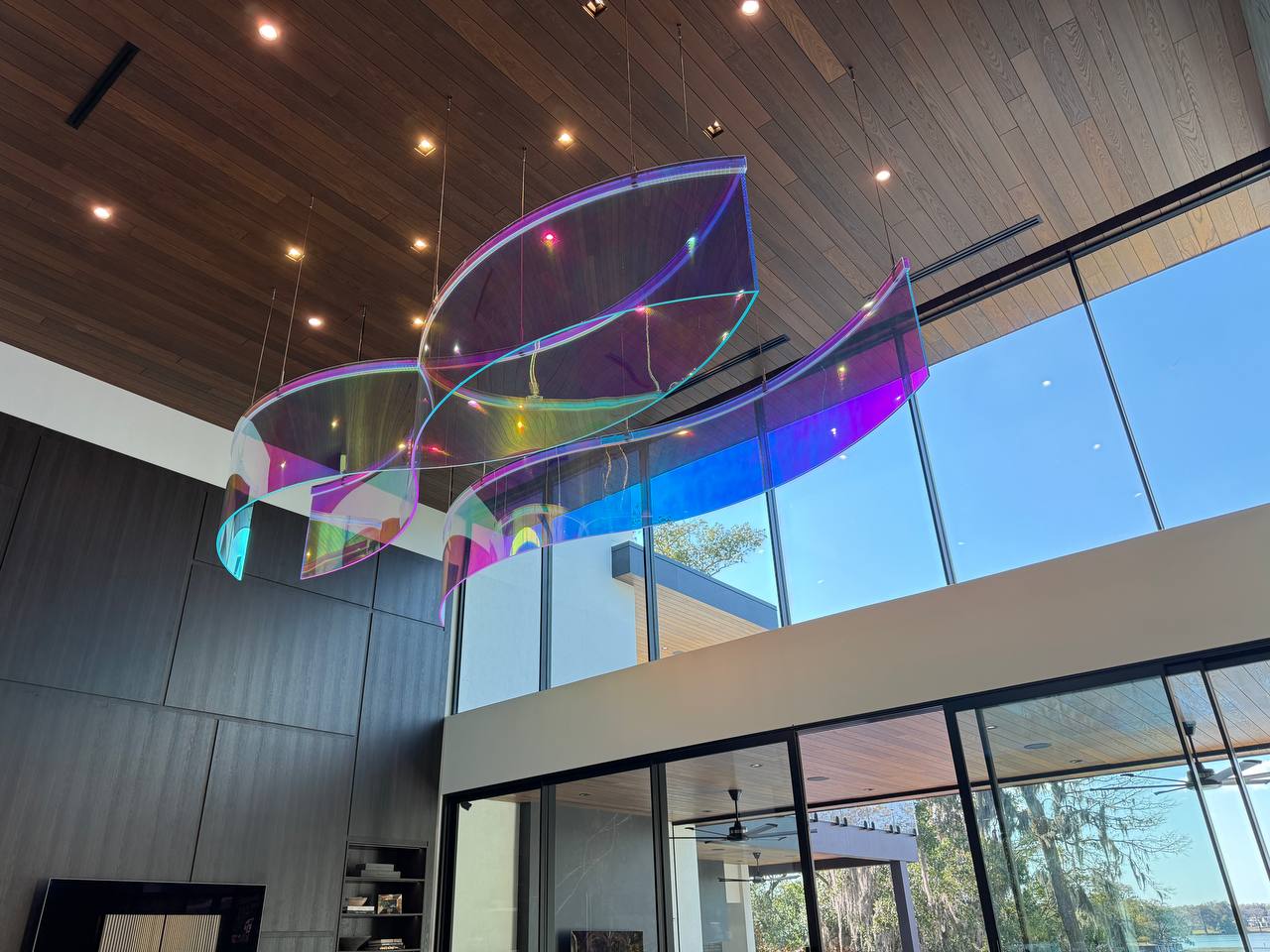
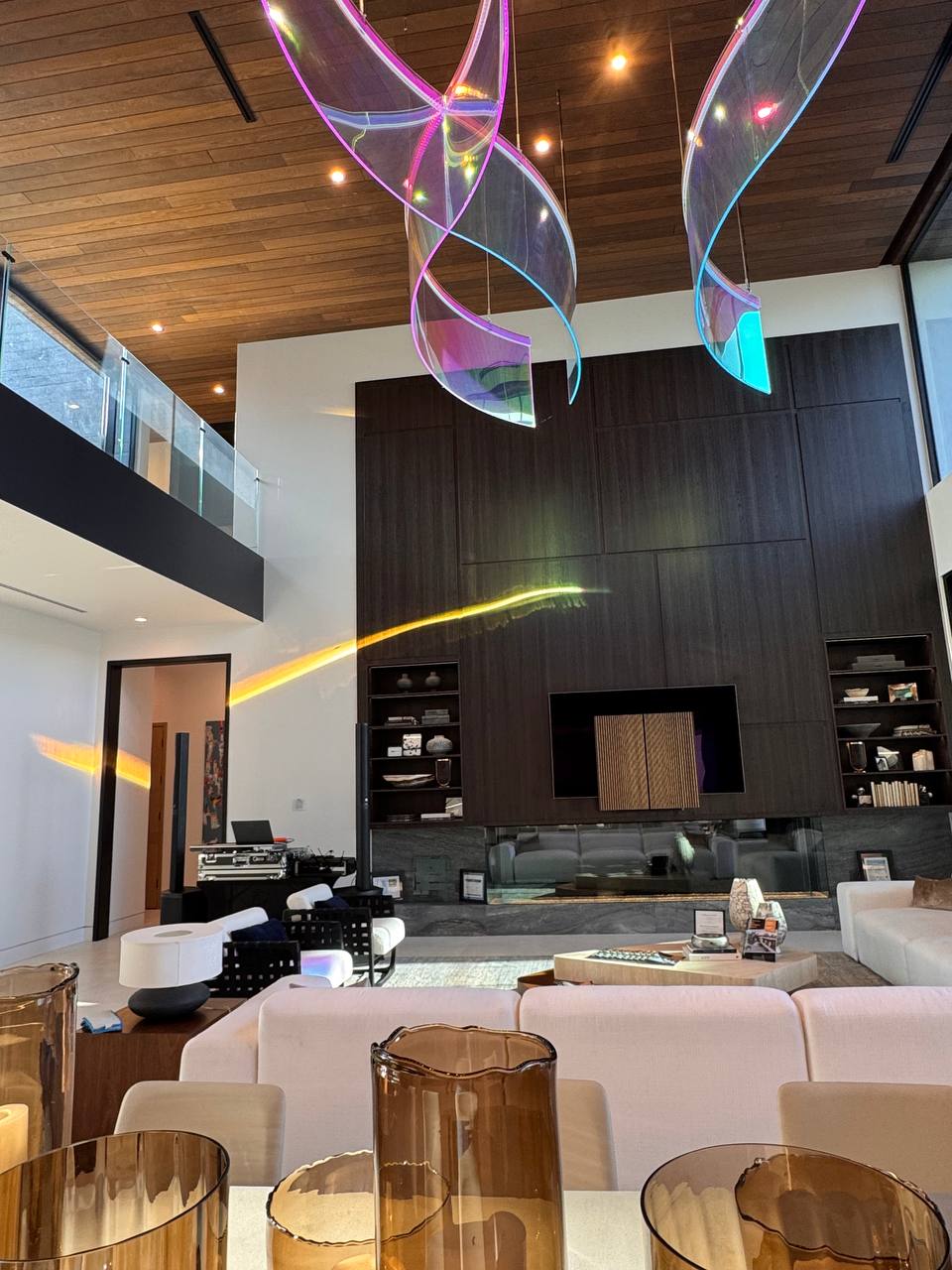
This is the part of my work that started as art before it became a service line. Long before "light choreography" was something clients asked for by name, I was building dichroic sculptures and installations where the entire point was watching color shift and refract as the light source or the viewer moved. That instinct, light as a living, timed material, is exactly what carries over into designing lighting for galas, brand activations, and immersive installations.
Light Has a Tempo, Just Like Music
When we design lighting for an event, we're not asking "what colors do we want?" first. We're asking "what's the emotional arc of the next three hours?" A gala has a rhythm: guests arrive into a warm, welcoming glow; the room shifts cooler and more focused during a program or keynote; it opens up into something bigger and more saturated for the reveal, the auction, the performance; then it settles back down for dinner and conversation.
Each of those transitions has a pace. Some should be instant, a blackout into a reveal is meant to jolt. Others should be so slow that nobody can point to the moment it happened, only that the room feels different than it did twenty minutes ago. That's choreography. It's the same skill as pacing a film scene or building a setlist, knowing when to hold and when to cut.
Color as Emotional Vocabulary
Color isn't decoration in this kind of design, it's vocabulary. Warm amber and gold read as intimacy and welcome. Deep blues and violets read as anticipation, something about to happen. A hard-edged white or cool cyan reads as clarity and focus, useful right before an announcement or a speaker takes the stage. Saturated magenta or red reads as energy and celebration, which is why it shows up at the reveal moment and almost nowhere else in a well-designed show.
We build a limited palette for each event, usually four to six colors with clear jobs, rather than letting a fixture library's full RGB range run wild. Restraint is what makes the big moments land. If everything is saturated all night, saturation stops meaning anything.

Brand Activations and Installations: Light as the Story Itself
For brand activations, light choreography often carries the entire narrative. Guests move through a space, and light guides where they look, when they pause, and what they feel is significant. A single accent light on a product reveal, timed to a sound cue, does more than a wall of screens, because it feels deliberate, not just loud.
Immersive art installations push this further. There, light isn't supporting an event schedule, it is the event. Timing gets choreographed down to individual seconds: a slow color bloom that takes ninety seconds to fully resolve, a pulse tied to a heartbeat-tempo soundtrack, a moment of total darkness held just long enough to feel uncomfortable before the room blooms back to light. That discomfort-then-release rhythm is one of the most powerful tools in experiential design, and it only works if the timing is exact.
Great light choreography is invisible until the moment it isn't, then it's the only thing anyone remembers.
Building the Cue Stack
Practically, this means every event we design gets a cue stack, a timed sequence of looks, triggers, and fades mapped against the actual run of show, not a generic template. Some cues fire automatically off a timecode or a control system trigger; others are manually called by an operator watching the room. We build in both, because live events never run exactly on schedule, and a good lighting operator needs the ability to hold a cue a beat longer if the moment calls for it.
- Map the emotional arc of the event before touching a single fixture
- Assign each phase a color family and a movement pace, not just a "look"
- Build automated cues for reliability, manual overrides for the moments that need a human's timing
- Test the full sequence at production pace, not just in isolation, so transitions feel earned
This same design language shows up in how we approach lighting for houses of worship, which is a topic close to my heart lately, the goal there is nearly identical: use light to shape emotional pacing across a service, just with a different vocabulary of restraint. If that's relevant to your space, I wrote about that here.
If you're planning an event, activation, or permanent installation and want light that actually does something rather than just sitting there looking pretty, that's exactly the kind of project we love. Get in touch through our contact page, or browse our art and experiences work to see more of this in action.