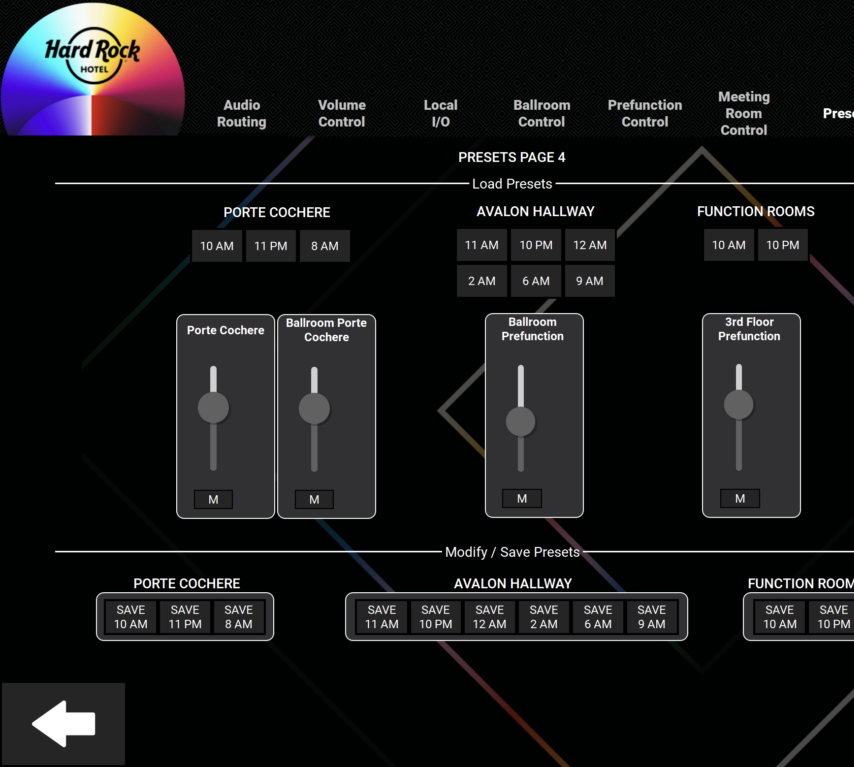
Here's a scenario I've walked into more times than I can count: a church has genuinely good gear. Decent speakers, a modern video switcher, some lighting fixtures, maybe a streaming rig. And yet every Sunday feels like a small crisis, because running it all requires remembering which of four different remotes controls what, which laptop needs to be awake before the prelude, and who the one volunteer is that actually understands the lighting console.
That's not a gear problem. That's a control problem. And it's the single most common reason good AV systems in worship spaces feel fragile even when the equipment itself is solid.
The Volunteer Reality
Unlike a corporate AV room or a themed attraction, worship AV is overwhelmingly run by volunteers — people who show up early on a Sunday, love their church, and are doing this alongside a full-time job and a family. They are not trained AV engineers, and they shouldn't have to be. A system that only works well in the hands of one specific "AV guy" is a system that fails the moment that person is sick, on vacation, or moves away.
The churches that run smoothly week after week, regardless of who's on rotation, are almost always the ones that have consolidated control into a single, simple interface — usually one touch panel — rather than a scattered collection of separate remotes, apps, and consoles for sound, video, lighting, and streaming.
What "Unified Control" Actually Means
A unified control system means every subsystem in the building — audio processing, video routing, lighting scenes, streaming start/stop, even HVAC or door access in some builds — talks to one central control processor. That processor exposes a single, simplified touch panel interface designed around how your team actually operates a service, not around how the underlying hardware is organized.
- One "Start Service" button that brings up house lights to the preset level, unmutes the correct microphones, and arms the stream — instead of five separate manual steps
- Preset recall for different service types (Sunday morning, Wednesday small group, Christmas Eve) so lighting, camera framing, and audio routing switch together, not one at a time
- Clear, plain-language labels on every button — "Sanctuary Lights," "Sermon Mic," "Go Live" — instead of cryptic input numbers only the system designer understands
- Remote monitoring, so a designer or integrator can check in on the system's health from off-site without a truck roll for every hiccup
This is the kind of programming that's normally spec'd by dedicated control system programmers — the same discipline used in high-end hospitality and corporate AV — and it doesn't require your church to become "certified" in anything. It requires hiring an integrator who designs the whole system with volunteer usability as the actual design brief, not an afterthought.
The best control system is the one your newest volunteer can run correctly on their first Sunday.
Why This Pays Off Over Time
Unified control isn't just about Sunday morning convenience — it changes the economics of running AV long-term. Fewer support calls because the interface prevents common mistakes. Faster onboarding for new volunteers because there's one system to learn, not four. Easier expansion later, because a new camera or lighting fixture gets added into the same control ecosystem instead of becoming yet another separate remote on the booth counter.

It also directly supports everything else we've talked about in this series — the distributed audio design that gets speech clarity right in every pew, the lighting programmed for mood rather than chaos, and the multi-camera broadcast rig for your online congregation. None of those systems reach their full value if a volunteer has to juggle four separate control surfaces to run them together on a Sunday morning. If you haven't yet, it's worth reading how these pieces connect in our posts on worship sound design and multi-camera worship broadcast systems.
Getting Started
You don't need to rip out existing gear to move toward unified control. In most cases, an integrator can bring your current sound, video, and lighting systems onto a shared control platform, add a touch panel, and program presets around your actual service flow — a project that's far more about programming and interface design than new hardware. It's often one of the highest-value, lowest-disruption upgrades a church can make.
If your team is tired of juggling remotes every Sunday, let's talk about what a unified system would look like for your space. Reach out through our contact page, or read more about our AV integration approach.